Last updated 2026-07-25
TL;DR
There's no lawful reconstitution protocol for retatrutide because it isn't an approved drug and isn't on the FDA's 503A compounding list [1][2]. Trial patients received it as a pre-formulated weekly subcutaneous injection [3]; nobody outside a registered trial can lawfully obtain, mix, or self-administer it right now.
Can you legally reconstitute retatrutide at home?
No. There's no legal version of this question to answer, and that matters more than any mixing instructions could. Retatrutide has no FDA approval for any use. A search of Drugs@FDA, the agency's own database of approved drug products, returns nothing under the generic name retatrutide [1]. It exists only inside clinical trial protocols, where dosing, storage, and administration are controlled by the sponsor and IRB-approved procedures, not by whoever is holding the vial. That means the entire premise of a home reconstitution guide, get a vial, add liquid, draw up a dose, doesn't apply here. There's no vial you can legally obtain, because there's no legal seller. Anything marketed to you as retatrutide is being sold outside the law regardless of how it's labeled. We cover the legal mechanics of why in detail in retatrutide peptide buy, but the short version: this article exists to explain what trials actually did, and why that can't be replicated safely or lawfully at home.
Why isn't retatrutide on the FDA's compounding list?
Compounding pharmacies (called 503A pharmacies) can only use bulk drug substances that clear a specific legal cascade, and retatrutide clears none of it. Under 21 U.S.C. 353a(b)(1)(A)(i), a bulk substance used in compounding must either comply with an existing USP or NF monograph, or, if no monograph exists, be a component of an FDA-approved drug. Only if neither of those applies can a pharmacy use a substance from FDA's 503A Bulks List [2]. Retatrutide has no USP monograph, is not a component of any approved drug, and does not appear on that list. The final 503A Bulks List contains exactly six substances: Brilliant Blue G, cantharidin, diphenylcyclopropenone, N-acetyl-D-glucosamine, squaric acid dibutyl ester, and thymol iodide [3]. None of them is a peptide, and retatrutide isn't among them. There's a separate requirement, too. Even if an ingredient did qualify, 503A also demands that the bulk substance come from a facility registered under FD&C Act section 510 and ship with a valid certificate of analysis [2]. Research-use-only material from an unregistered overseas supplier fails this test regardless of anything else about the molecule. So retatrutide fails on two independent legal grounds, not one. For comparison, the 503B bulks list, which governs larger outsourcing facilities rather than corner compounding pharmacies, is a separate roster under 21 CFR 216.24, and retatrutide isn't on that one either [4]. There is currently no compounding pathway for this molecule anywhere in the US regulatory system.
What does 'reconstitution' even mean for a peptide like this?
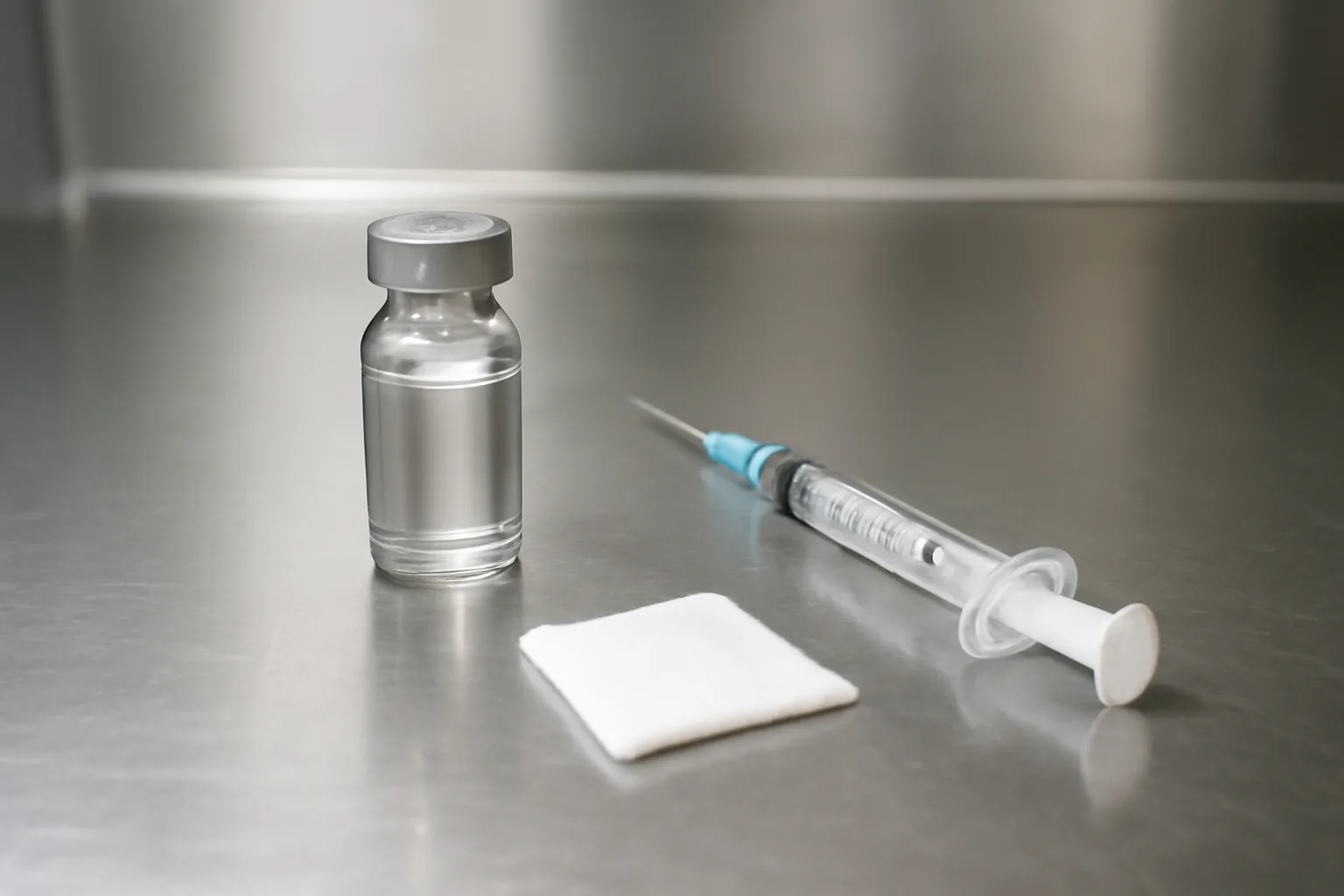
Reconstitution just means turning a freeze-dried (lyophilized) powder back into an injectable liquid, usually with bacteriostatic water. It's standard practice for peptide-based drugs that aren't stable in solution long-term. But the process only makes sense in the context of an approved or trial-supplied product with known concentration, purity, and sterility, none of which apply to gray-market retatrutide. In the phase 2 obesity trial, participants received retatrutide as a weekly subcutaneous injection at doses studied up to 12 mg, with a mean weight reduction of 24.2 percent at 48 weeks in the 12 mg arm versus 2.1 percent for placebo [5]. That's a striking number, and it's the number driving most of the headlines. But the trial supplied the drug in a controlled, pre-dosed form under clinical monitoring. It did not test what happens when someone reconstitutes unregulated powder of unknown purity in a kitchen and injects a guessed dose. The registered trial (NCT04881760, listed under the development code LY3437943) documents the dose arms and route studied [6]. That's the only source of real dosing data that exists. Nothing published tells you what a home-mixed, unregulated version of the molecule actually contains, how concentrated it is, or whether it's sterile.
How do vendors get away with selling 'research-use-only' retatrutide?
They don't, legally, and FDA has already said so directly. A research-use-only or not-for-human-consumption disclaimer doesn't change how a product is classified if the seller's marketing says otherwise. Under 21 CFR 201.128, a drug's "intended use" is determined by labeling claims, advertising, and statements by the seller, not by a disclaimer buried in fine print [7]. FDA acted on exactly this logic in a March 2026 warning letter to Gram Peptides, writing that despite research-use-only labeling, "evidence from the company's website established that its products were intended to be drugs for human use," and the letter specifically named retatrutide marketed on that site [1]. So if a site's homepage talks about weight loss, appetite suppression, or metabolic effects, and then slaps "not for human consumption" on the product page, FDA doesn't treat that as a loophole. It treats the marketing as the truth and the disclaimer as irrelevant. That's worth knowing if you're evaluating a vendor's claims: the disclaimer protects nobody, and it isn't evidence the product is legal or safe.
What does 'how long does reconstituted retatrutide last' even mean if it's not legal?
This question comes up constantly in gray-market forums, and it has no verified answer because no manufacturer, regulator, or peer-reviewed source has published stability data for reconstituted retatrutide outside trial conditions. For comparable peptide drugs that are FDA-approved, manufacturers publish specific reconstituted shelf-life and storage temperature guidance based on stability testing submitted to FDA as part of the approval package. Retatrutide has no approved labeling, so there's no equivalent guidance, no verified refrigerated shelf life, and no confirmed sterility data for whatever material a gray-market buyer might be reconstituting. Any number you see quoted online ("lasts 30 days refrigerated," or similar) is not sourced to anything regulatory or peer-reviewed. It's a guess, at best borrowed from a different drug's labeling, at worst invented by a vendor with an incentive to make the product sound stable and manageable. That uncertainty is a safety problem on its own, independent of the legal one. Unknown concentration plus unknown sterility plus unknown degradation timeline is not a combination anyone should be injecting.
What is retatrutide, mechanistically, and how does it differ from approved drugs?
Retatrutide is a triple agonist: it acts on the GIP, GLP-1, and glucagon receptors simultaneously. That's mechanistically different from semaglutide, which acts only on the GLP-1 receptor, and from tirzepatide, which combines GIP and GLP-1 but not glucagon [5]. The added glucagon receptor activity is the theoretical reason retatrutide's trial weight-loss numbers ran higher than earlier incretin drugs. Glucagon receptor agonism is linked to increased energy expenditure in addition to appetite suppression, though the phase 2 data can't tell us yet how that plays out over years of real-world use, or in more diverse populations than trial cohorts. For day-to-day comparison, semaglutide is approved and marketed as Ozempic and Wegovy, and tirzepatide as Mounjaro and Zepbound, both with published long-term safety data behind them [8]. Retatrutide has neither an approved product nor an established long-term safety record outside its trial populations. If you want the full mechanism-and-evidence picture, that's covered in more depth in retatrutide peptide.
What has retatrutide actually been tested for, and in which trials?
Retatrutide's evidence base isn't limited to the one widely cited obesity trial. It spans type 2 diabetes trials as well, and has moved into later-phase registered studies [9]. Three ClinicalTrials.gov records give the clearest public picture: NCT04881760, the original phase 2 obesity study testing LY3437943 in participants with obesity or overweight [6]; NCT05929066, a later-phase trial listing enrollment criteria, comparators, and endpoints [9]; and NCT05882045, a second later-phase registration with its own dosing and design details [10]. Together these give a fuller (though still incomplete) picture of where the drug program stands, and none of them are recruiting participants to self-source the drug outside the study. Enrollment in a registered trial is, right now, the only lawful way a person in the US can receive retatrutide at all. If trial results interest you specifically for dosing patterns, the trial-reported numbers (not a self-administration protocol) are broken down further in retatrutide dosage chart.
Could retatrutide get added to the compounding list soon?
Not through any process currently underway. FDA's Pharmacy Compounding Advisory Committee met on July 23 and 24, 2026 to consider seven peptides for the 503A Bulks List: BPC-157, KPV, TB-500, MOTS-c, emideltide (DSIP), semax, and epitalon [11]. Retatrutide wasn't among them and has never been nominated for that list. Even if it had been nominated and the committee had voted favorably, that alone wouldn't create a legal pathway. Advisory committee recommendations are non-binding, and adding any substance to the Bulks List requires full notice-and-comment rulemaking, a formal, multi-year regulatory process [11]. So there's no pending action that would make home reconstitution of retatrutide legal in the near term, and nothing in the public record suggests one is coming.
What are your actual, lawful options right now?
If you're chasing retatrutide because of the phase 2 trial's headline number, 24.2 percent mean weight loss at 12 mg over 48 weeks [5], it's worth knowing that lawful options already exist that get meaningful results with a real safety record behind them. Tirzepatide (Mounjaro, Zepbound) and semaglutide (Ozempic, Wegovy) are both FDA-approved, prescribable today, and backed by years of post-market safety monitoring [8]. Orforglipron, an oral GLP-1 receptor agonist, was approved as Foundayo (NDA 220934) in six strengths from 0.8 mg to 17.2 mg, giving an approved oral incretin option for patients who'd otherwise be tempted to source an unapproved compound because they want to avoid injections [12]. None of these match retatrutide's trial numbers exactly, but they're legal, monitored, and prescribed by a clinician who can adjust dose and watch for side effects in real time. NIDDK, the federal government's diabetes and digestive disease research institute, publishes neutral guidance on evidence-based weight management that's worth reading regardless of which drug class you end up considering [13]. And if retatrutide's trial results are genuinely part of your decision-making, understanding the full side effect profile reported so far matters just as much as the weight-loss number; that's covered in retatrutide side effects.
What about ordering it from overseas as 'personal importation'?
FDA has a published personal importation policy, and it does not create a loophole for unapproved drugs like retatrutide. The policy explains the narrow, discretionary circumstances under which FDA might not act against a personal shipment of an unapproved drug (generally serious conditions with no US treatment available, limited supply, and no promotion targeting US patients), and even then, admission isn't guaranteed [14]. Retatrutide doesn't fit that narrow discretionary space anyway, because approved alternatives already exist for weight management and diabetes (tirzepatide, semaglutide, orforglipron). Under 21 U.S.C. 355, a new drug can't be introduced into interstate commerce without an approved application, full stop . That's the statutory backbone for why retatrutide is unavailable outside a trial, and personal importation doesn't override it.
Frequently asked questions
How do you reconstitute retatrutide with bacteriostatic water?
There's no lawful protocol to give, because retatrutide isn't an approved drug or a legal compounding ingredient [1][2]. Trial patients received pre-dosed subcutaneous injections under clinical supervision [3], not home-mixed vials. Any "reconstitution guide" you find online is describing an unregulated product of unverified purity and concentration, not a medically validated process.
Is it legal to obtain retatrutide for personal use?
No. Retatrutide has no FDA approval [1] and isn't on the 503A or 503B compounding lists [2][5]. Under 21 U.S.C. 355, it can't lawfully enter interstate commerce without an approved application [17]. Research-use-only labels don't change this; FDA treats seller marketing, not disclaimers, as evidence of intended use [8][9].
What dose of retatrutide was used in clinical trials?
The phase 2 obesity trial (NCT04881760) tested weekly subcutaneous doses, with the 12 mg arm producing a mean 24.2 percent weight reduction at 48 weeks versus 2.1 percent for placebo [3][6]. These are trial-reported figures under clinical supervision, not a dosing recommendation for self-administration outside a study.
How long does reconstituted retatrutide last once mixed?
No verified stability or shelf-life data exists for reconstituted retatrutide, because it has no FDA-approved labeling and no published manufacturer stability studies. Any shelf-life figure circulating online is unsourced or borrowed from an unrelated approved drug. Combined with unknown purity from unregistered suppliers, this makes reconstituted gray-market material an unpredictable product to inject.
Why isn't retatrutide on the FDA's 503A Bulks List?
Because it fails every step of the legal cascade: no USP or NF monograph exists for it, it isn't a component of an approved drug, and it doesn't appear on the six-substance 503A Bulks List [2][3]. It also lacks the required registered-facility sourcing and certificate of analysis that 503A compounding demands [4].
Does a 'research use only' label make retatrutide legal to sell?
No. FDA determines intended use from labeling claims, ads, and seller statements, not disclaimers, under 21 CFR 201.128 [8]. In a March 2026 warning letter, FDA told a seller that its website established the products, including retatrutide, were intended as drugs for human use despite research-only labeling [9].
What's the difference between retatrutide and tirzepatide?
Retatrutide is a triple agonist, acting on GIP, GLP-1, and glucagon receptors. Tirzepatide acts on GIP and GLP-1 only, without glucagon activity [6]. Tirzepatide is FDA-approved as Mounjaro and Zepbound with established safety data [10]; retatrutide has no approval and remains investigational.
Can a doctor legally prescribe retatrutide?
No. Outside a registered clinical trial, no clinician in the US can lawfully prescribe retatrutide. It has no FDA approval [1], no compounding pathway [2][3][4], and its interstate sale would violate 21 U.S.C. 355 [17]. Enrollment in a registered trial (like NCT05929066 or NCT05882045) is currently the only lawful access route [11][12].
Might FDA add retatrutide to the compounding list soon?
Nothing in the current record suggests that. FDA's July 2026 advisory committee considered seven other peptides for the 503A list; retatrutide wasn't among them and has never been nominated [13]. Even a favorable vote wouldn't create a pathway on its own, since adding a substance requires full notice-and-comment rulemaking.
What are legal alternatives to retatrutide right now?
Semaglutide (Ozempic, Wegovy) and tirzepatide (Mounjaro, Zepbound) are FDA-approved with published safety data [10]. Orforglipron, an oral GLP-1 agonist, was approved as Foundayo (NDA 220934) in doses from 0.8 mg to 17.2 mg [14], giving an approved oral option for people hoping to avoid unapproved injectable compounds.
Is retatrutide approved for type 2 diabetes or only obesity?
Neither, currently. Retatrutide has no FDA approval for any indication [1]. It has been studied in registered type 2 diabetes trials in addition to the obesity program [11], but study participation isn't the same as approval, and no application for either indication has been cleared.
What is personal importation and does it let me legally get retatrutide?
FDA's personal importation policy describes narrow, discretionary circumstances where the agency may not act against small personal shipments of unapproved drugs, mainly for serious conditions with no US treatment [16]. It doesn't apply cleanly to retatrutide, since approved weight-loss and diabetes drugs already exist, and it never overrides 21 U.S.C. 355 [17].
Sources
- Drugs@FDA, FDA-approved drug products database: A search for retatrutide returns no FDA-approved product
- 21 CFR 216.23, eCFR current through 2026-07-08: The final 503A Bulks List contains six named substances, none of them retatrutide or a peptide
- 21 U.S.C. 353a(b)(1)(A)(i): 503A requires a bulk substance to satisfy a monograph, approved-drug-component, or Bulks List cascade before it can be compounded
- 21 CFR 216.24: The separate 503B bulks list for outsourcing facilities also does not include retatrutide
- Jastreboff AM et al., New England Journal of Medicine, 2023: Phase 2 trial results: 24.2 percent mean weight loss at 12 mg versus 2.1 percent placebo at 48 weeks, and retatrutide's triple-receptor mechanism
- ClinicalTrials.gov NCT04881760: Registration record for the phase 2 obesity trial of LY3437943 (retatrutide), listing dose arms and route
- 21 CFR 201.128: Intended use is determined by labeling, advertising, and seller statements, not disclaimers
- ClinicalTrials.gov NCT05929066: A later-phase retatrutide trial registration listing enrollment criteria, comparators, and endpoints; retatrutide has also been studied in type 2 diabetes trials
- ClinicalTrials.gov NCT05882045: A second later-phase retatrutide trial registration with its own dosing and design details
- Federal Register, Docket FDA-2025-N-6895, published 16 April 2026: FDA's July 2026 advisory committee considered seven other peptides for the 503A list, not retatrutide, and advisory votes are non-binding requiring rulemaking to take effect
- Drugs@FDA, FDA-approved drug products database (NDA 220934): Orforglipron was approved as Foundayo in six strengths from 0.8 mg to 17.2 mg
- NIDDK, Weight Management: Federal guidance on evidence-based weight management as a neutral reference point
- FDA, Personal Importation: FDA's personal importation policy describes narrow discretionary circumstances for unapproved drug shipments
- 21 U.S.C. 355: A new drug cannot be introduced into interstate commerce without an approved application